


PDRN: salmon DNA, the star of K-beauty
You will certainly have come across it: ‘PDRN’ serums, ‘polynucleotide’ patches, ‘recovery’ routines from Seoul. Behind the acronym lies a real and interesting active — surrounded by plenty of promises that need reading with a critical eye. We would rather explain how it works than oversell it.
What is PDRN?
PDRN — short for polynucleotides (or polydeoxyribonucleotides) — is an active made of purified DNA fragments. Most often it is extracted from salmon or trout gonads (Oncorhynchus mykiss, Oncorhynchus keta), then purified at high temperature: this process removes the proteins and explains why it is so well tolerated.
On an INCI list, you will find it as Sodium DNA (sometimes Sodium DNA/RNA). Its official function in the European Commission’s database of cosmetic ingredients (CosIng) is skin conditioning — in other words, an agent that keeps the skin in good condition. No more, no less, as far as the regulation is concerned.
What about ‘vegan’ PDRN?
There are also plant-derived PDRNs (DNA from ginseng or Damask rose, obtained by fermentation and then fragmented). On paper, they follow pathways comparable to marine PDRN. But to date, no human clinical trial has assessed them when applied to the skin. We will come back to this below — without giving them credit they have not yet earned.
Why Korea made it a star
In Korea, PDRN made its name in medicine: it is best known for in-clinic uses, under medical supervision. It is this story — the story of the active and its origins — that built its reputation, until it spilled over into mainstream skincare.
PDRN built its reputation in the clinic, by injection. Applied to the skin in a cosmetic, it does not do the same thing — and that is perfectly normal.
Keeping this distinction in mind is the key to understanding what a PDRN product can — and cannot — do for you.
What it really does on the skin
Healthy skin is a remarkably effective barrier. A basic rule of skin penetration: above roughly 500 daltons, a molecule struggles to cross the stratum corneum. And PDRN is a very large polymer. The logical consequence: on intact skin, it stays mostly on the surface.
That is not bad news — it is precisely where its cosmetic effects, which are very real, take place:
- A tightening film. As it dries, PDRN forms a supple film on the surface that smooths and tightens the look of the skin: the plumped, ‘bouncy’ effect you feel almost immediately.
- Humectant power. It helps the skin attract and hold water at the surface: a suppler complexion, smoother texture, revived radiance.
- Comfort. Its good tolerance makes it a favourite with sensitised skin in search of gentleness.
In the laboratory, on the isolated active (not on a finished product), studies describe, for example, antioxidant activity after UV exposure. These are in vitro results: useful for understanding the ingredient, never to be confused with an effect obtained on your skin.
Put simply: a good PDRN product revives radiance, plumps and smooths the look of fine lines, supports barrier comfort and accompanies the skin’s surface renewal. Benefits for appearance and comfort — which is already a lot for a single active.
What we’ll tell you — and what we never will
It is our house rule: we sell the benefit, never the myth. Here, in black and white, is the line we take on PDRN.
What a PDRN product does
- Visibly plumps and tightens the surface
- Helps the skin hold on to water, for suppleness
- Revives radiance, smooths the look of fine lines
- Comforts sensitised skin
- Supports barrier comfort
What we will never promise you
- ‘Regenerates your cells / tissues’
- ‘Repairs your DNA’
- ‘Like an injection / mesotherapy’
- ‘Erases wrinkles’ (we say: a younger-looking appearance)
- ‘Hydrates in depth’ (its action stays on the surface)
Why such caution? Because in France, as throughout the European Union, a cosmetic acts on the appearance, comfort and surface protection of the skin. Claiming that it ‘regenerates tissue’ or ‘replaces an injection’ would present it as a medical procedure: that is prohibited — and, above all, untrue.
Vegan PDRN: the honest view
Salmon, trout… the marine source of PDRN puts some people off. So the plant-based alternative is appealing — and legitimately so. Our position is simple: you may well prefer a plant-based PDRN for ethical reasons or personal sensibilities, provided you do not credit it with efficacy that has not yet been demonstrated in humans when applied to the skin. The day the proof arrives, we will write about it. Until then, we present it for what it is: promising, not (yet) proven.
Marine PDRN appears as Sodium DNA on the INCI list. If you are allergic to fish, check the ingredients and, if in doubt, ask for advice before trying it.
Choosing the right PDRN product
Not all ‘PDRN’ products are equal — far from it.
The ‘ppm’ trap
To ride the trend, many formulas contain only a trace (100 ppm, i.e. 0.01%). At that dose, the cosmetic effect is negligible: it is an expensive humectant, nothing more.
What makes a good PDRN
- A meaningful concentration (ideally stated on the product).
- Low-molecular-weight (hydrolysed) PDRN, more available to the skin.
- Careful delivery technology (encapsulation) that helps the active settle where it works.
Its best partners
PDRN never works alone. For a complete ‘recovery’ routine, it pairs well with hyaluronic acid (hydration), ceramides and panthenol (barrier comfort) and niacinamide (radiance, refined texture).
Adding it to your routine
PDRN slips easily into a minimalist routine:
- In the evening, after cleansing and toner, on slightly damp skin.
- Before richer textures (cream, balm), which seal everything in.
- In the morning too, if you like — but always finish with sun protection.
A fan of slugging (sealing in hydration under an occlusive layer overnight)? PDRN works well with it — but slugging is best kept for skin that is neither oily nor prone to blemishes.
PDRN at Seoul Paris Care
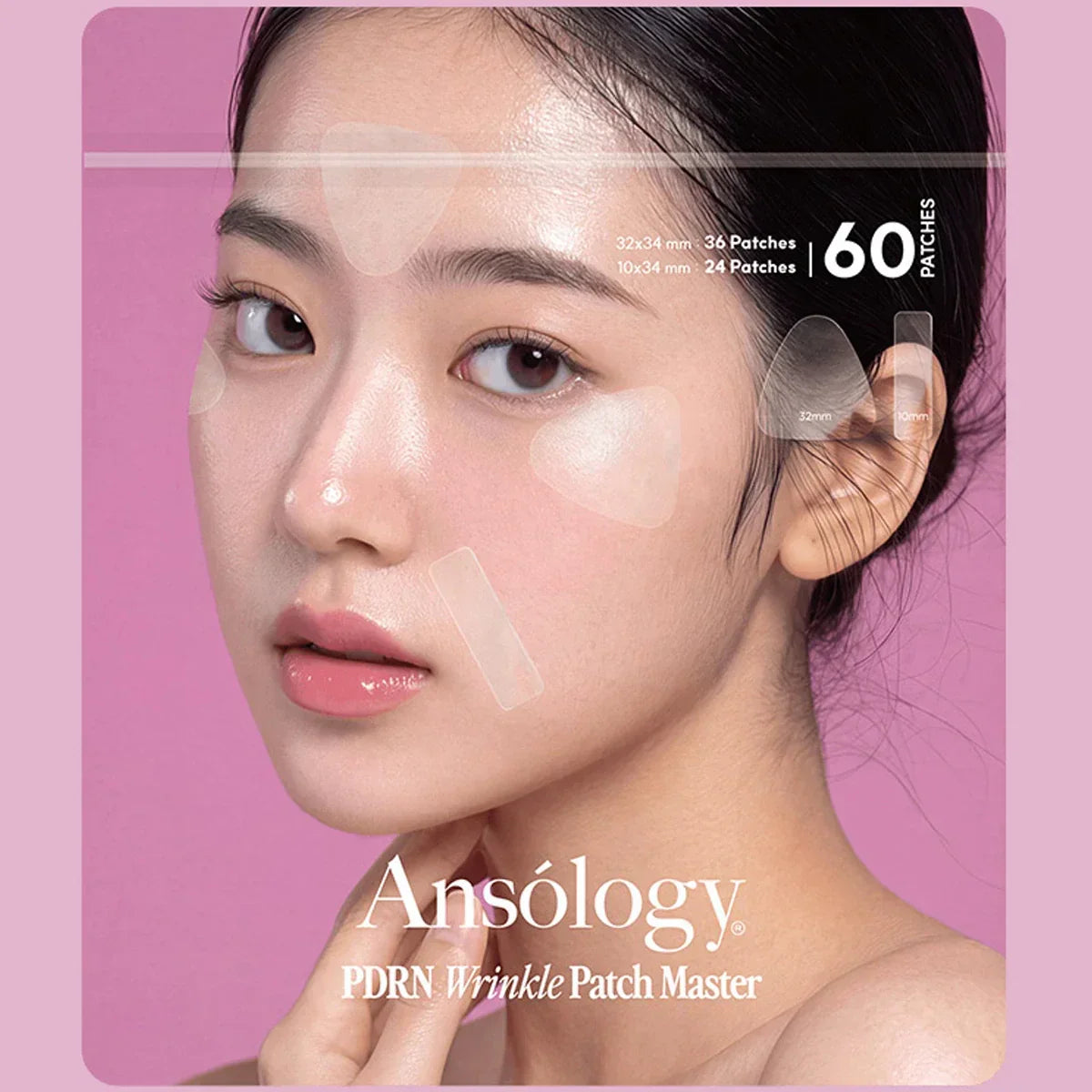
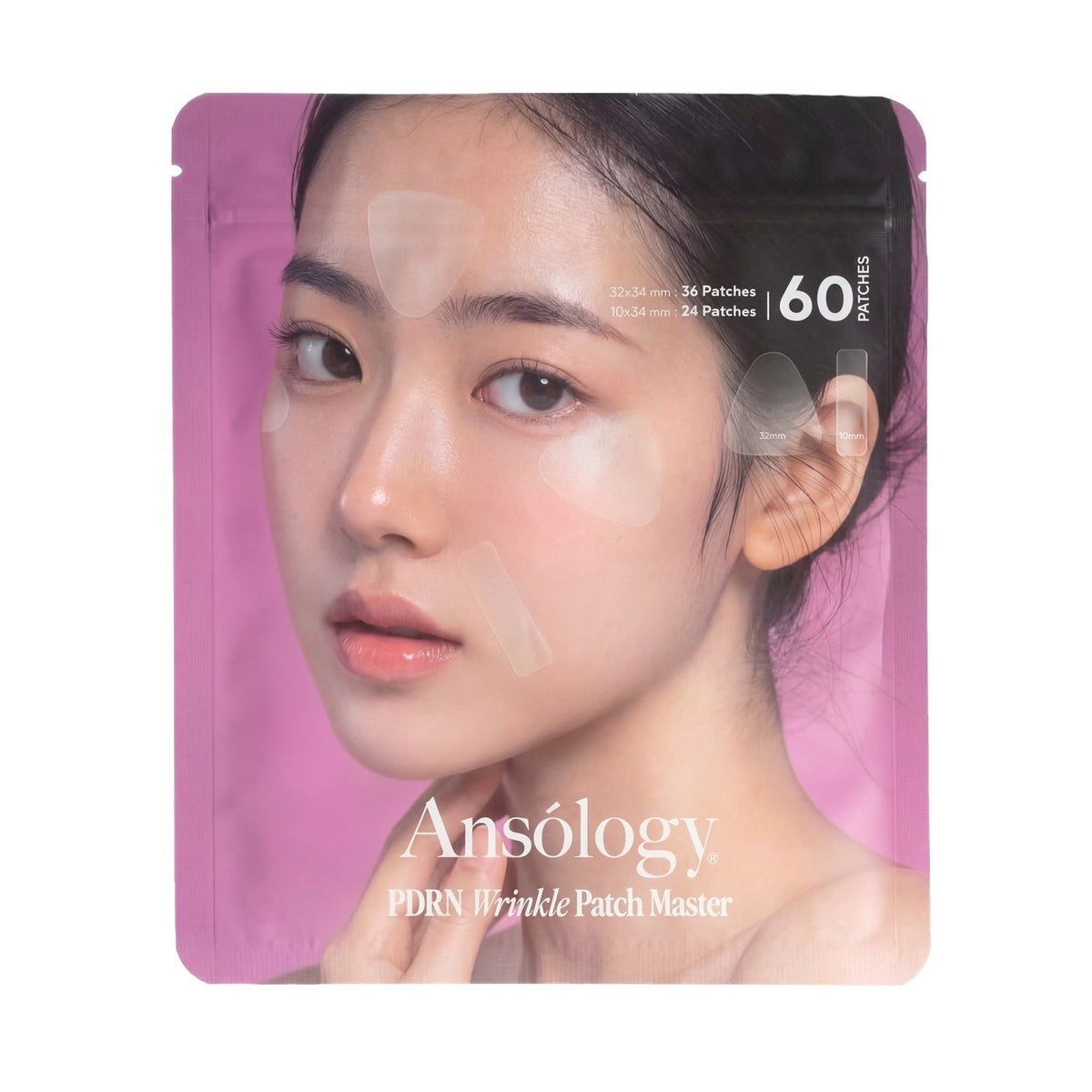
In our range, you will find PDRN in one place only: the PDRN Master Anti-Wrinkle Patches by Ansólogy, our dermocosmetic house.
In these patches, PDRN works alongside biomimetic peptides and adenosine, the formula’s lead actives. They also contain a very low dose of retinol (0.01%): they are applied in the evening and carry the statement ‘Contains Vitamin A. Consider your daily intake before use.’
One last point of honesty, because the confusion is common: Ansólogy’s Bouncy Plumping Serum contains no PDRN. Its stars are phyto-collagen (Tremella & Chaga) and peptides. PDRN = the patches. We would rather be upfront about it.
Frequently asked questions
Is PDRN really salmon DNA?
Yes: it is made of purified DNA fragments, most often from salmon or trout, listed as Sodium DNA on the INCI list. A plant-derived version also exists. If you are allergic to fish, check the ingredients before trying it.
Is a PDRN cream like an injection?
No. Injections are medical procedures carried out in a clinic. In a cosmetic, PDRN stays on the surface: a tightening film, hydration, comfort. The benefits concern appearance and comfort — real, but different in nature from an injection.
Is PDRN suitable for sensitive skin?
Its good tolerance makes it interesting for sensitised skin. A patch test in the crook of the elbow is still wise, and watch out for the other actives in the formula: the patches, for example, contain a very low dose of retinol (0.01%) and are applied in the evening.
Is vegan PDRN as effective?
To date, no human study has demonstrated its efficacy when applied to the skin. You may prefer it out of conviction, but we do not present it as a proven equivalent of marine PDRN.
Where can I find PDRN at Seoul Paris Care?
In Ansólogy’s PDRN Master Anti-Wrinkle Patches (peptides, adenosine and PDRN). The same house’s Bouncy Plumping Serum does not contain any: its star actives are phyto-collagen and peptides.
Sources & framework
- European Commission — CosIng, ‘Sodium DNA’ entry (function: skin conditioning).
- PDRN A2A receptor mechanism — PMC5405115.
- Plant-derived PDRN (ginseng), in vitro data — PMC10649580.
- Claims framework — Regulation (EU) No 655/2013 & ARPP (French advertising self-regulatory body), Cosmetic Products Recommendation V8.
This article is for information only and is not medical advice. A cosmetic cares for and enhances the skin; it is not a medicine. If in doubt, ask a healthcare professional for advice.

