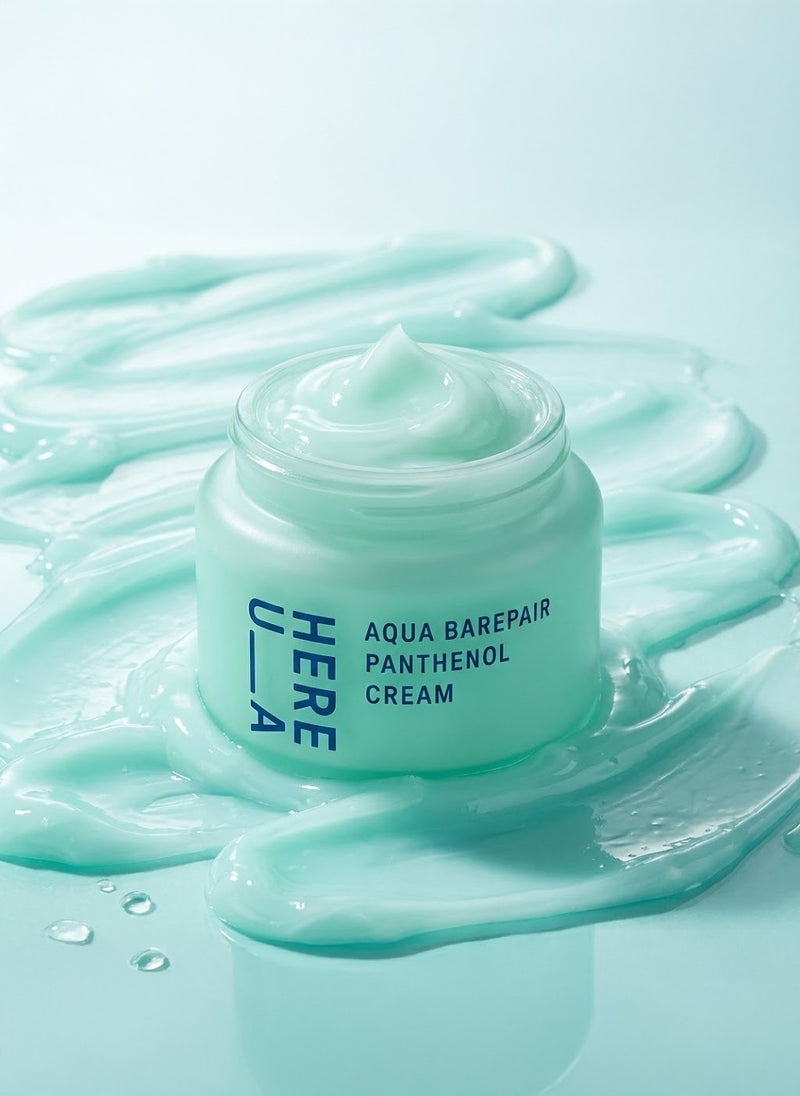
Panthenol & Cica: soothing and protecting the skin barrier
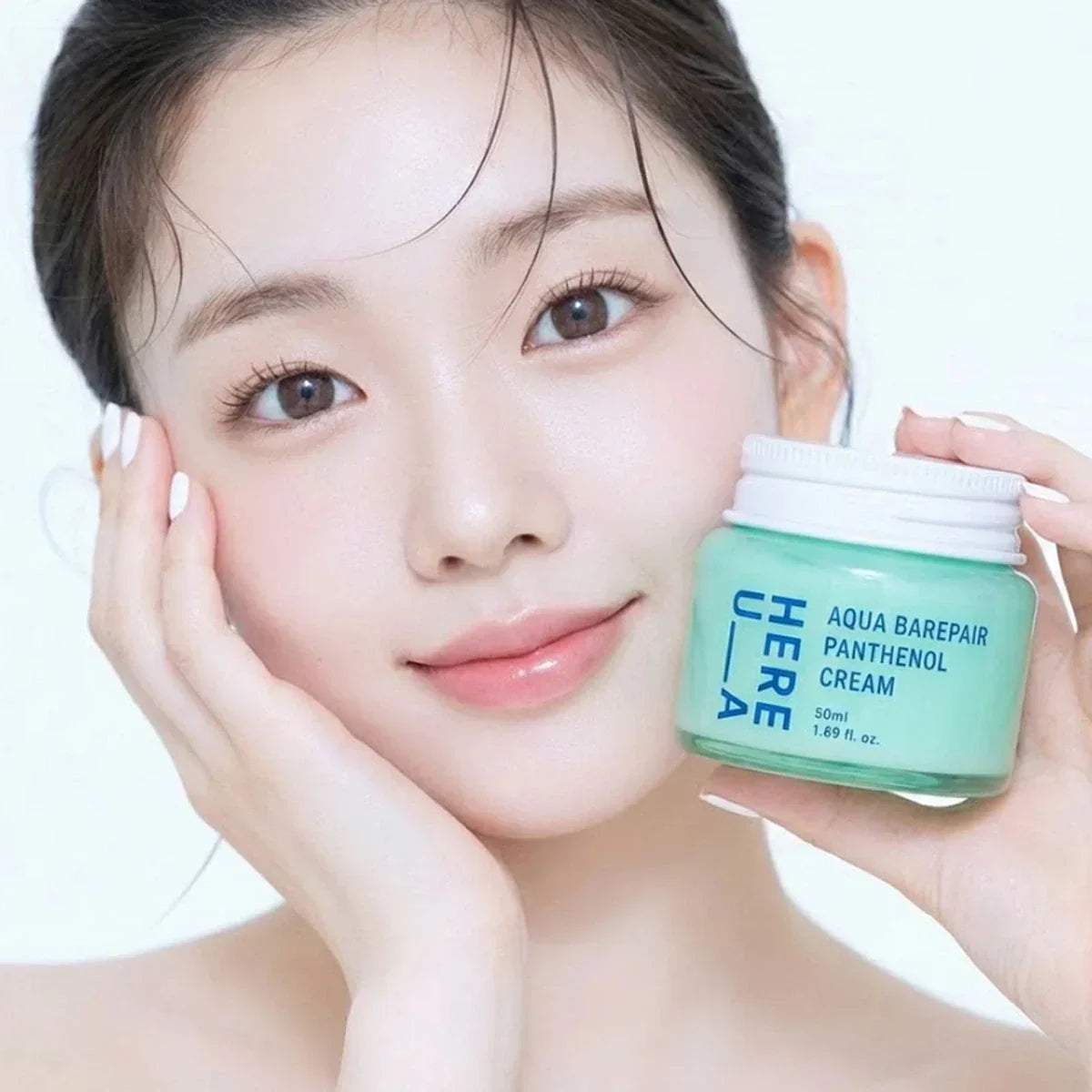
Skin that feels tight, flushes or heats up at the slightest change? Two actives crop up again and again in soothing Korean routines: panthenol and Cica. They deserve their reputation — as long as you understand what they do (and what they don’t).
Panthenol (pro-vitamin B5)
In the skin, panthenol is converted into vitamin B5. It is a humectant that helps the skin hold on to water, and a barrier support: it limits water loss through the skin (what professionals call TEWL). A double-blind study measured, over 7 days, an increase in hydration and a decrease in this water loss.
So we can say it plainly: panthenol restores the skin barrier and the hydrolipidic film (the same territory as pharmacy ‘cica’ creams). What it is not: a medicine — calming inflammation or closing wounds is a job for medicines, not cosmetics.
Cica (Centella asiatica)
‘Cica’ is Centella asiatica and its saponins (madecassoside, asiaticoside). In cosmetics, it soothes, eases discomfort and visibly reduces redness; it is also antioxidant and supports barrier comfort. On the anti-ageing side, it helps firm the look of the skin and smooth fine lines.
Part of the literature on Centella is medical (wound care, dermatitis). We do not cite those studies as proof, and we do not borrow their vocabulary: the cosmetic benefit (soothes, reduces the look of redness, comforts) is enough — and it is solid.
Why the duo works
The two are complementary: panthenol nourishes the barrier and holds in water, while Cica calms reactivity. For sensitive skin, it is exactly the pairing you want — in a pared-back routine, without layering irritating actives on the same evening.
Medical words: where we draw the line
Medical-sounding words are on every other label. It all depends on what you claim to restore. The skin barrier and the hydrolipidic film? Yes — that is legitimate cosmetic language. A lesion, a wound, a disease (eczema, rosacea)? No — that would be the language of medicine. That is the nuance we hold to.
What we can say
- Soothes, visibly reduces redness
- Restores the skin barrier / the hydrolipidic film
- Hydrates, limits water loss, comforts
- Suitable for sensitive and reactive skin
What we won’t say
- ‘Anti-inflammatory’ / ‘calms inflammation’
- ‘Heals / cures / treats’
- ‘Treats eczema / rosacea’
- ‘Repairs a lesion’ / ‘post-procedure’
The reactive-skin routine
- A gentle cleanser (no hot water, no harsh scrub).
- A soothing product with panthenol + Cica (cream or serum).
- Sun protection in the morning — stressed skin needs protecting.
The golden rule for reactive skin: less, but better. Avoid introducing several strong actives (retinol, acids) at the same time.
At Seoul Paris Care
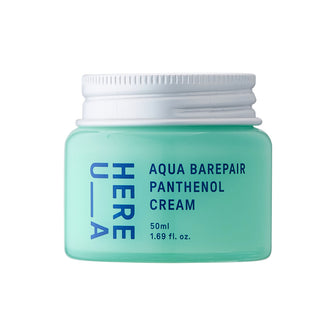
For the skin barrier, HERE U_A has made panthenol and heartleaf (houttuynia) its signature, to comfort reactive skin.
Frequently asked questions
Are panthenol and Cica suitable for sensitive skin?
Yes — this is where they shine. They soothe, hydrate and support barrier comfort. As always, a patch test in the crook of the elbow is wise.
What does ‘restoring the barrier’ mean exactly?
It means restoring the skin barrier and the hydrolipidic film — never a lesion. The barrier is the surface layer that holds in water and protects against external stressors; a cosmetic can support its comfort.
Can it help with eczema or rosacea?
No. These are soothing, comfort-focused cosmetics, not medicines. A skin condition is a matter for your doctor or dermatologist.
Sources & framework
- Panthenol — Ebner et al., double-blind trial (hydration, TEWL).
- Centella / anti-ageing — Haftek et al., 2008.
- Claims framework — Regulation (EU) No 655/2013.
This article is for information only and is not medical advice. A cosmetic cares for and enhances the skin; it is not a medicine. If you have a skin condition, see a healthcare professional.